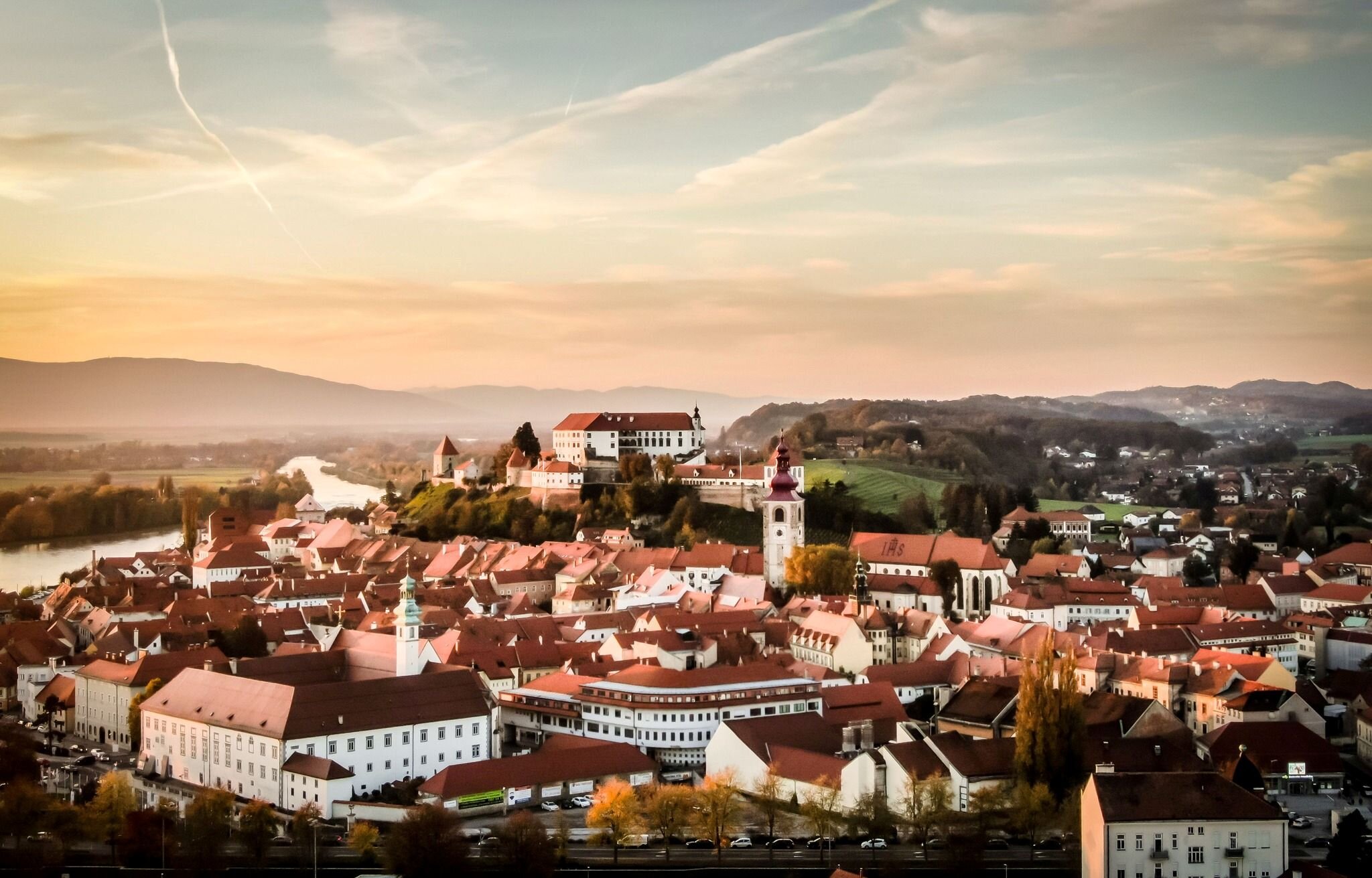
Ptuj se ne sta lì, sulle rive lente della Drava, con la naturalezza di chi sa di avere alle spalle duemila anni di storia e non sente il bisogno di ostentarli. Eppure, nel 2026, è proprio lei, la più antica città della Slovenia, a conquistare il titolo di Best Cultural Heritage Town in Europe, assegnato dalla giuria di European Best Destination.
I Romani la chiamavano Poetovio. Prima ancora, c’erano insediamenti dell’età della pietra. Poi l’Impero, le terme, il vino, le strade che portavano merci e persone da un capo all’altro dell’Europa centrale. Oggi Ptuj è una cittadina di poco più di 20.000 abitanti, elegante e raccolta, che porta con discrezione il peso della sua storia.
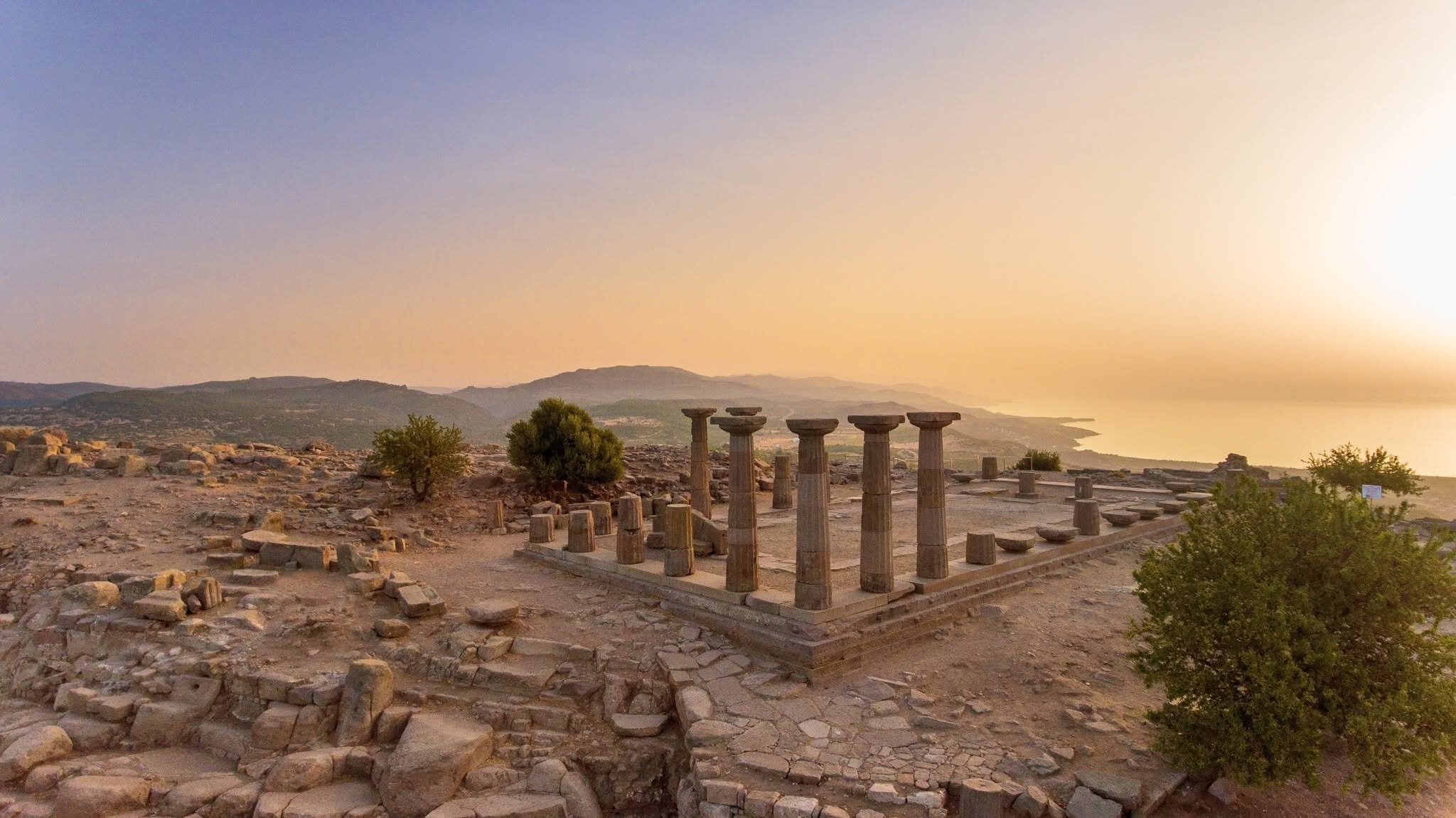
La romanità qui non è una citazione scolastica, ma qualcosa che si può toccare e vivere: reperti archeologici, anfore, mosaici e visite guidate in costume che, tra primavera ed estate, riportano in scena legionari, senatori e vestali. E ad agosto, con i Giochi Romani, la città si trasforma in un grande teatro a cielo aperto, colorato e sorprendentemente contemporaneo.
Kurentovanje: quando il Carnevale diventa rito
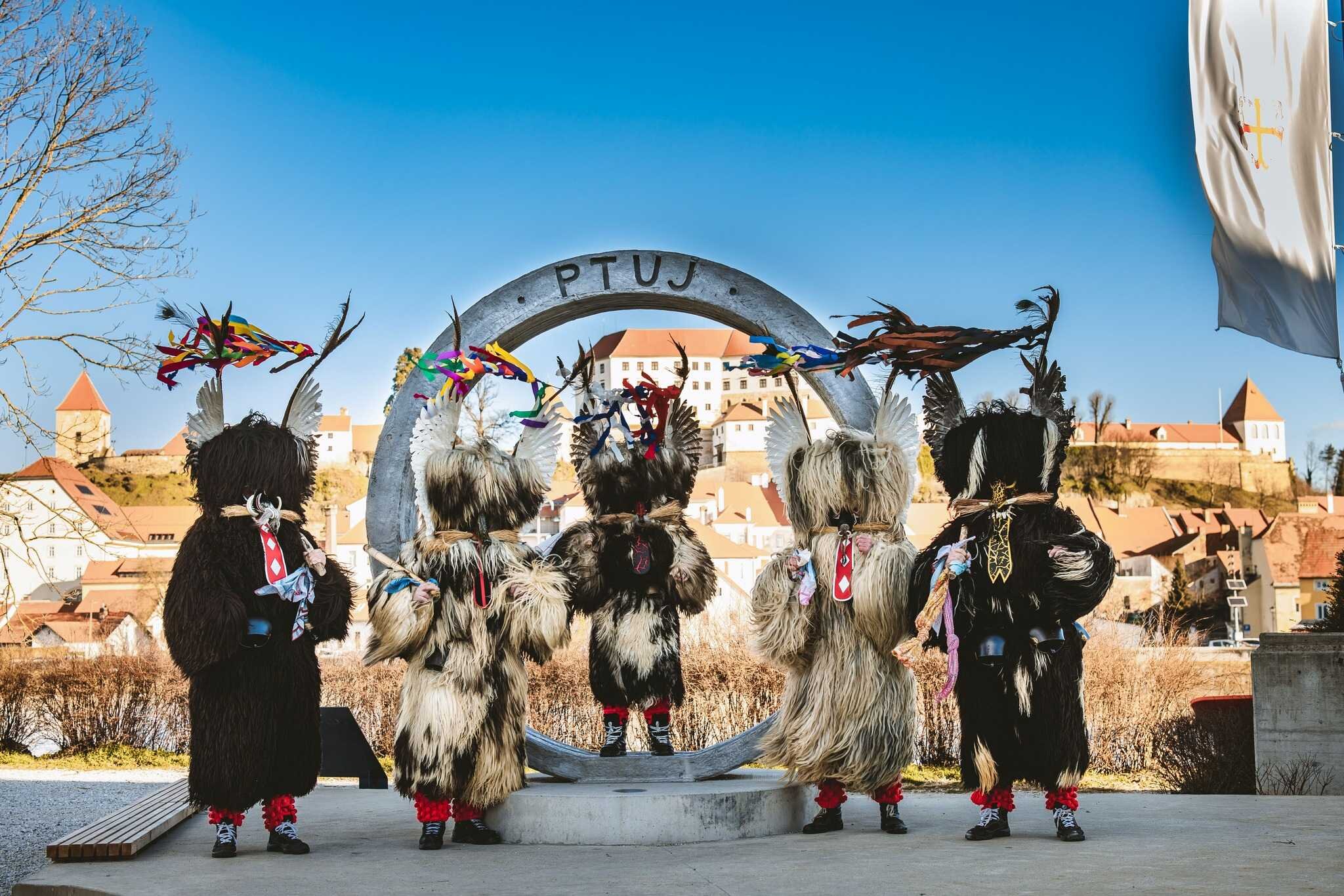
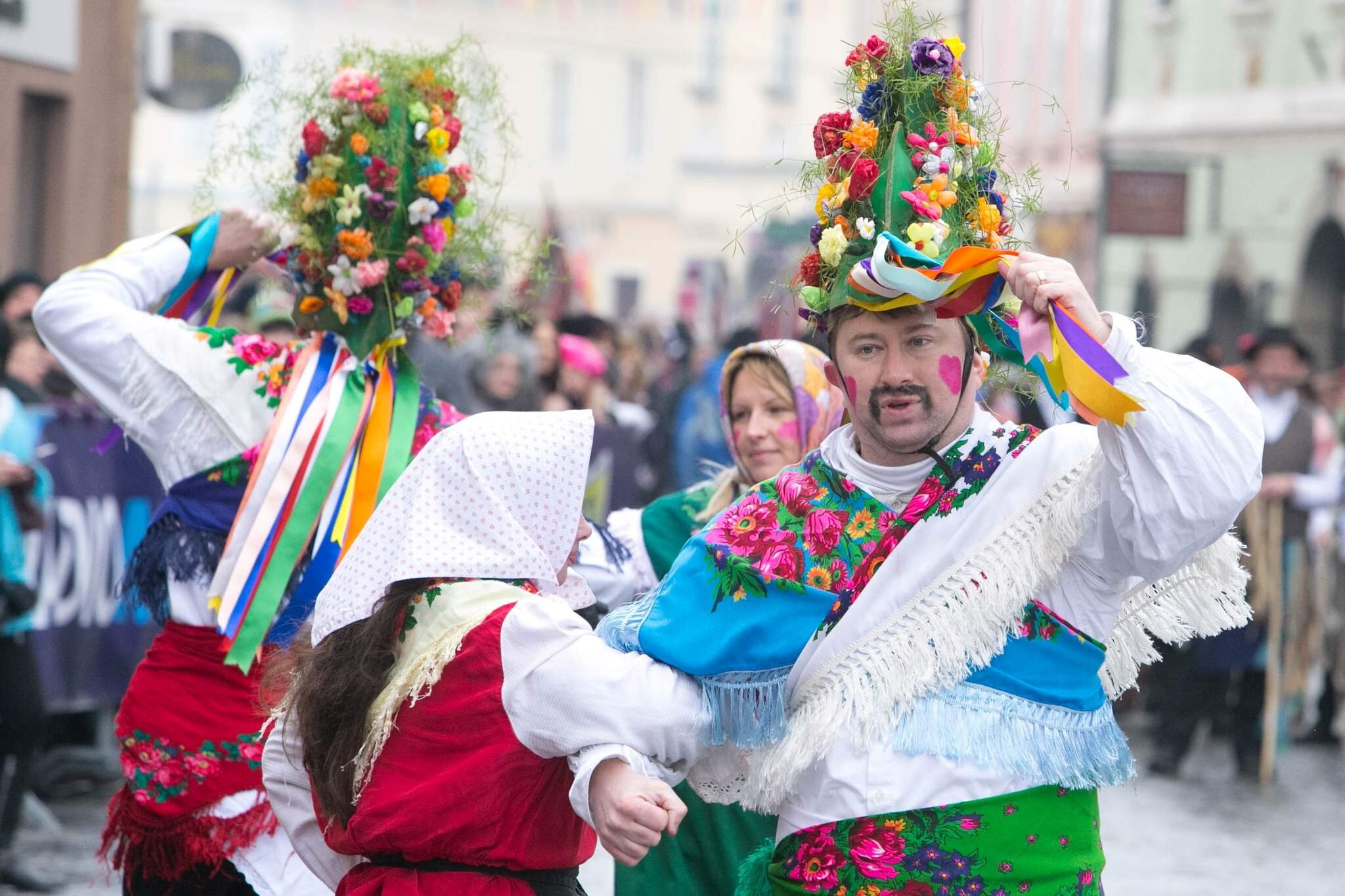
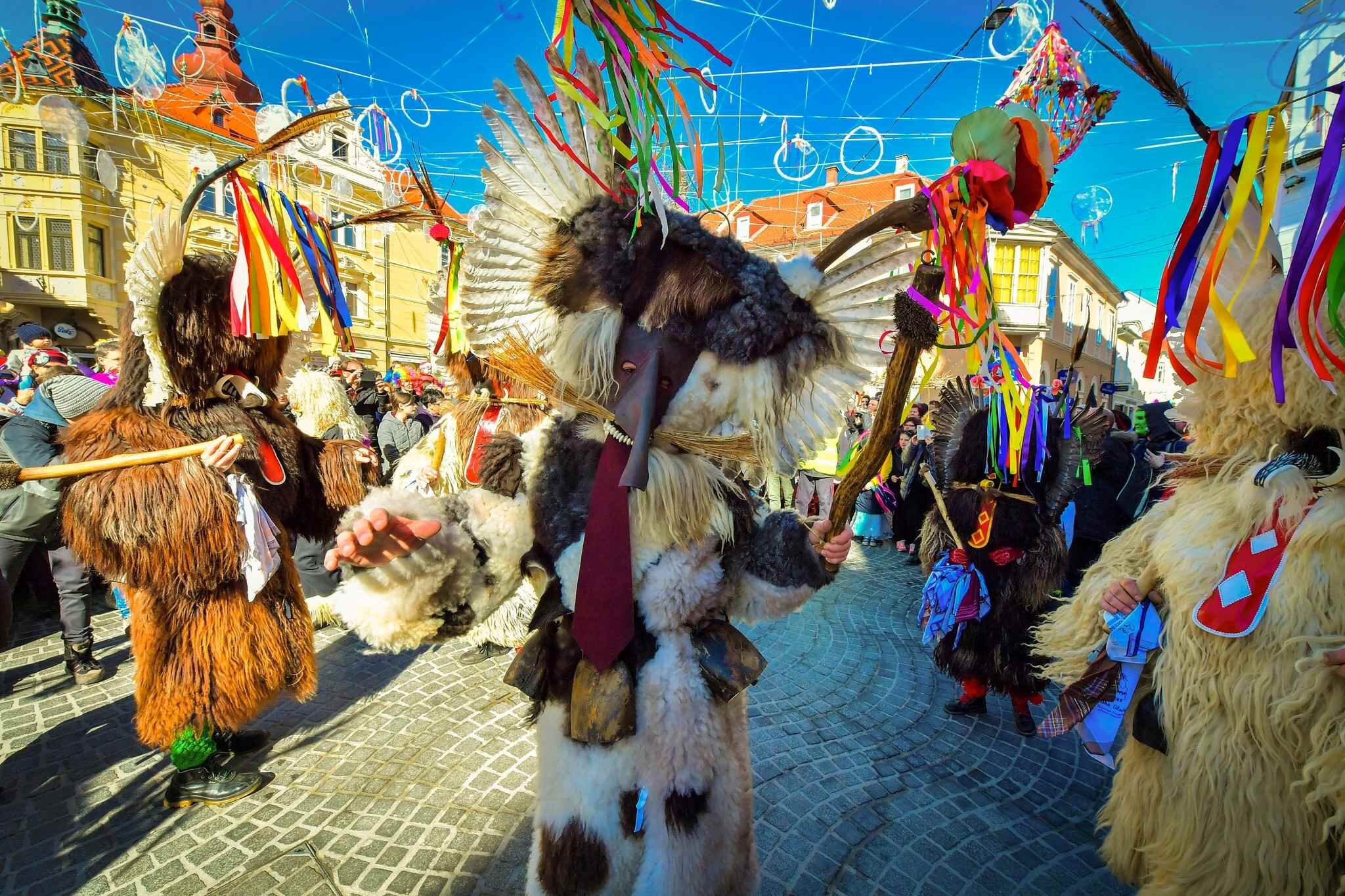
Se però c’è un momento in cui Ptuj rivela davvero la sua anima, è febbraio. Intorno al Martedì Grasso, la città cambia volto grazie al Kurentovanje, uno dei carnevali più affascinanti d’Europa, riconosciuto dall’UNESCO come patrimonio culturale immateriale.
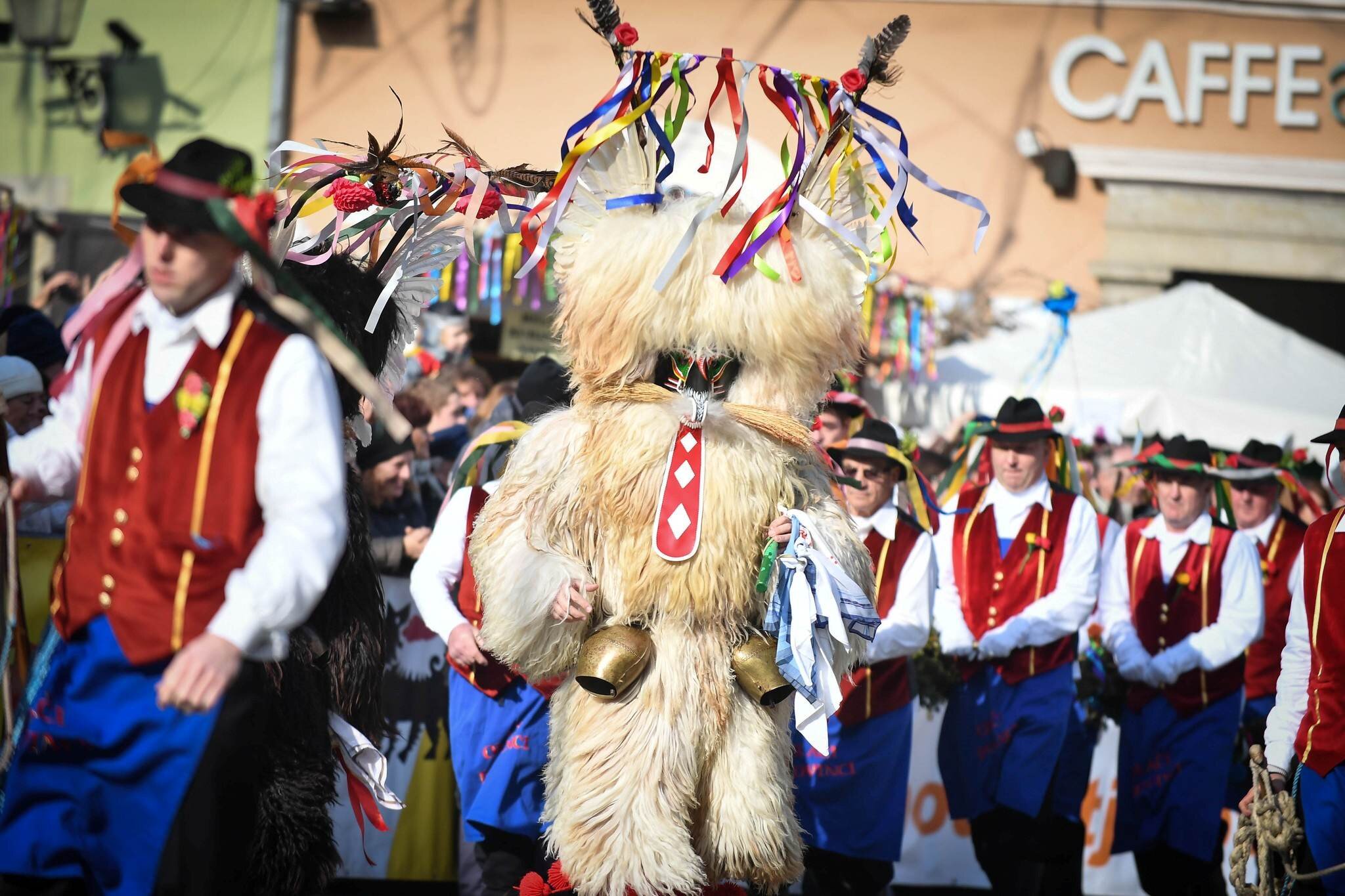
Il protagonista è il Kurent: maschera arcaica, quasi mostruosa all’apparenza, ma benevola per vocazione. Indossa una pesante veste di pelle di pecora, campanacci alla vita, calze colorate e un copricapo inconfondibile. Il suo compito è scacciare il male, risvegliare la terra, augurare prosperità. Un rito che affonda le radici in tradizioni pagane e che oggi trasforma Ptuj in un museo etnografico all’aperto, fatto di suoni, danze, incontri porta a porta.
Per capire davvero questo universo simbolico, vale la pena visitare la Casa del Kurent, spazio interattivo che racconta – anche ai più piccoli – il senso profondo di una maschera che è molto più di un costume.
Vino, monasteri e una vite d’oro
A Ptuj il vino non è una moda recente. Lo dimostrano le anfore romane, ma soprattutto la Ptujska klet, la cantina più antica della Slovenia, attiva dal 1239 sotto un convento francescano. Otto secoli di storia che convivono con una visione aperta all’innovazione.
Tra le sue mura è custodito un vero tesoro: lo Zlata trta 1917, il vino sloveno più antico ancora conservato. Un simbolo di continuità, di tempo che passa e si stratifica, proprio come accade a Ptuj.
Festival come forma di identità
Città antica, sì. Ma tutt’altro che immobile. Ptuj vive di un calendario culturale sorprendentemente fitto, che attraversa tutte le stagioni. Dai Days of Wine and Poetry, che uniscono versi e calici in un’atmosfera quasi baudelairiana, al festival Art Stays, che porta l’arte contemporanea internazionale negli spazi storici della città.
C’è poi Arsana, una delle rassegne musicali estive più importanti della Slovenia, capace di accogliere artisti internazionali in contesti scenografici unici. Nel 2026, tra gli ospiti, anche Joss Stone. Segno che a Ptuj la cultura non è nostalgia, ma dialogo continuo con il presente.
Terme, inverno e fughe romantiche
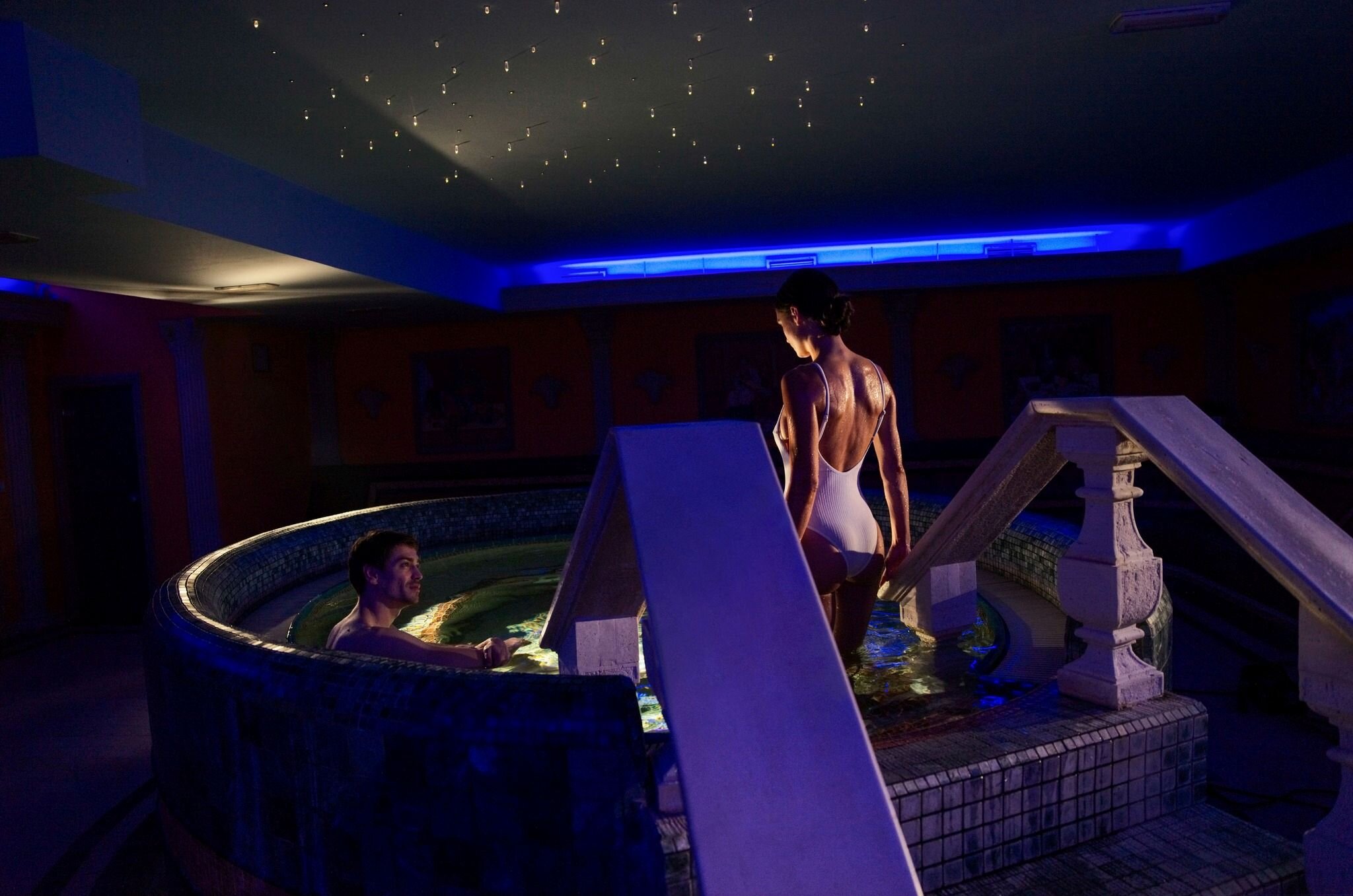
Febbraio, a Ptuj, è anche il mese perfetto per rallentare. Le sorgenti termali alimentano il grande complesso delle Terme Ptuj, con oltre 4.000 metri quadrati di piscine interne ed esterne, aree relax e percorsi benessere. Un rifugio ideale per una fuga romantica tra San Valentino e Carnevale, quando il contrasto tra il vapore delle acque calde e il suono dei campanacci dei Kurenti rende l’esperienza ancora più memorabile.
Il castello che domina la Drava, la tradizione vinicola, i rituali ancestrali, i festival internazionali: tutto concorre a costruire una città che non conserva il passato sottovetro, ma lo trasforma in esperienza. Ed è probabilmente questo il motivo per cui, nel 2026, l’Europa ha deciso di guardare proprio qui.
Ptuj, where history wears a mask
The Slovenian town named Europe’s Best Cultural Heritage Destination 2026
Ptuj lies quietly along the slow-flowing banks of the Drava, with the natural confidence of a place that knows it carries two thousand years of history and feels no need to show off. And yet, in 2026, it is precisely this small town — the oldest in Slovenia — that has been awarded the title of Best Cultural Heritage Town in Europe by the jury of European Best Destination.
The Romans called it Poetovio. Before that, there were Stone Age settlements. Then came the Empire, thermal baths, wine, and the roads that carried goods and people across Central Europe. Today, Ptuj is a refined and compact town of just over 20,000 inhabitants, bearing the weight of its past with quiet elegance.
Roman heritage here is not a textbook reference, but something tangible and immersive: archaeological remains, amphorae, mosaics, and guided tours in Roman costume that, between spring and summer, bring legionaries, senators, and vestals back to life. And every August, with the Roman Games, the town turns into a vast open-air stage — colourful, theatrical, and unexpectedly contemporary.
Kurentovanje: when Carnival becomes ritual
If there is one moment when Ptuj truly reveals its soul, it is February. Around Shrove Tuesday, the town undergoes a transformation thanks to Kurentovanje, one of Europe’s most fascinating carnivals, recognised by UNESCO as Intangible Cultural Heritage.
At its centre stands the Kurent: an ancient mask, almost monstrous in appearance, yet benevolent in nature. Wrapped in a heavy sheepskin costume, bells around the waist, colourful stockings and a distinctive headdress, the Kurent’s mission is to chase away evil, awaken the earth and bring prosperity. A ritual rooted in pagan traditions that today turns Ptuj into an open-air ethnographic museum of sounds, dances and door-to-door encounters.
To fully understand this symbolic universe, a visit to the Kurent House is essential — an interactive space designed for all ages, exploring the deeper meaning of a mask that is far more than a costume.
Wine, monasteries and a golden vine
In Ptuj, wine is no recent trend. Roman amphorae bear witness to its ancient roots, but even more so does Ptujska klet, the oldest wine cellar in Slovenia, active since 1239 beneath a Franciscan monastery. Eight centuries of history coexist here with a forward-looking approach to winemaking.
Within its walls lies a true treasure: Zlata trta 1917, the oldest preserved Slovenian wine. A symbol of continuity, of time layering itself slowly — just as it does in Ptuj.
Festivals as a form of identity
Ancient, yes — but far from static. Ptuj thrives on a remarkably rich cultural calendar that spans the entire year. From the Days of Wine and Poetry, blending verses and glasses in an almost Baudelairean atmosphere, to Art Stays, which brings international contemporary art into the town’s historic spaces.
Then there is Arsana, one of Slovenia’s leading summer music festivals, hosting international artists in evocative locations throughout Ptuj. In 2026, among the guests, also British singer-songwriter Joss Stone. Proof that culture here is not nostalgia, but an ongoing dialogue with the present.
Thermal waters, winter and romantic escapes
February is also the perfect time to slow down in Ptuj. Its thermal springs feed the extensive Terme Ptuj complex, offering more than 4,000 square metres of indoor and outdoor pools, relaxation areas and wellness paths. An ideal retreat for a romantic escape between Valentine’s Day and Carnival, when the contrast between steaming waters and the echo of Kurent bells makes the experience truly unforgettable.
The castle overlooking the Drava, the wine tradition, ancient rituals and international festivals all contribute to shaping a town that does not preserve its past behind glass, but transforms it into lived experience. And this, perhaps, is why in 2026 Europe has chosen to look right here.