Nel 1986 gli Wham! si sciolgono all’apice di tutto. Dopo il tour in Cina, evento storico più che musicale, e il concerto d’addio a Wembley Stadium davanti a oltre duecentomila persone, la parabola della perfetta macchina pop anni Ottanta si chiude con un sorriso smagliante e coreografie impeccabili.
Da una parte Andrew Ridgeley, destinato a dissolversi lentamente nel rumore di fondo dell’industria. Dall’altra George Michael, ventiquattrenne, ambizioso, consapevole di avere qualcosa che va oltre l’estetica da poster adolescenziale: una voce nera in un corpo bianco, un istinto soul dentro l’ingranaggio del pop.
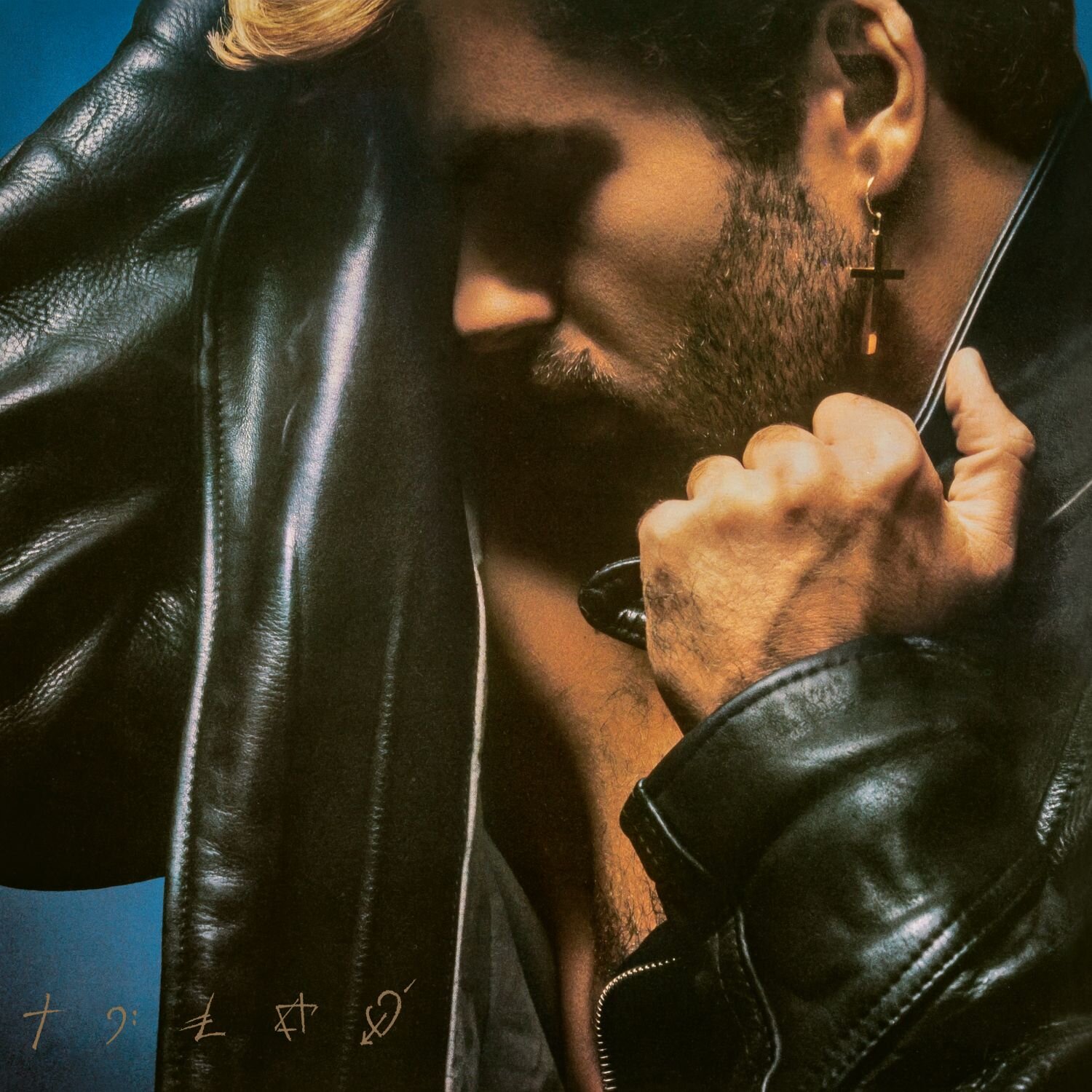
Faith, pubblicato nel 1987 e oggi riproposto in nuove edizioni in vinile da Sony Music, non è semplicemente un debutto solista, è un atto di ridefinizione identitaria. Un modo per dire: non sono un frammento di boy-band, sono autore, produttore, architetto del mio suono.
L’immagine iconica che ci rimanda a quel disco è di una chitarra appoggiata al jukebox, giubbotto di pelle, Ray-Ban, barba di tre giorni. Il videoclip di “Faith” è un manifesto estetico della fine degli anni Ottanta, un passaggio netto dall’innocenza fluorescente al desiderio consapevole.
In quell’epoca dominata da MTV, Michael Jackson aveva già trasformato il videoclip in cinema, Prince giocava con l’ambiguità sessuale e la teatralità, Madonna riscriveva le regole del corpo femminile nel pop. George Michael sceglie un’altra via: l’intimità esibita. La vulnerabilità che diventa sex appeal.
I numeri sono noti – oltre 25 milioni di copie vendute, un Grammy Award for Album of the Year, quattro singoli consecutivi al numero uno della Billboard Hot 100 – ma ridurre Faith a un fenomeno commerciale sarebbe un errore di prospettiva.
Perché ciò che colpisce, riascoltandolo oggi, è la coerenza autoriale. Scritto, arrangiato e prodotto quasi interamente da lui, l’album è un laboratorio di contaminazioni: il soul filtrato dal pop radiofonico, il gospel trasformato in tensione erotica, il funk che diventa confessione.
“Father Figure” è una preghiera carnale. “One More Try” è un sermone laico sul timore di amare. “Monkey” pulsa di desiderio e gelosia. Ogni brano sembra oscillare tra controllo e abbandono, tra disciplina produttiva e fragilità emotiva.
Il titolo stesso è ambiguo. Faith non è solo una parola rassicurante. È una dichiarazione di rischio. Avere fede significa esporsi, credere in qualcosa che non garantisce protezione.
Riascoltato oggi, quasi quarant’anni dopo, l’album suona come la costruzione di una maschera sofisticata dietro cui già si intravede la complessità dell’uomo. George Michael diventerà negli anni successivi una figura molto più tormentata, politicamente esplicita, fragile e coraggiosa insieme. Ma qui, in questo esordio, la tensione è tutta nella conquista dello spazio: emanciparsi dall’industria che ti ha creato senza rinnegarla del tutto.
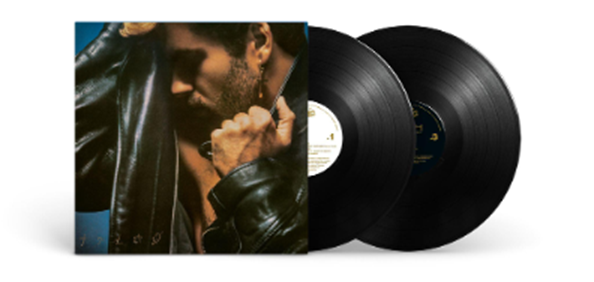
La nuova uscita in vinile, disponibile in diverse edizioni, dal Red & Black Marble al picture disc restituisce peso e lentezza a un disco che parlava già di identità e corpo. La scelta di materiali sostenibili, il Biovinyl, il packaging certificato FSC, la produzione attenta all’impatto ambientale: dettagli che dialogano con una sensibilità contemporanea che negli anni Ottanta non esisteva.
È interessante che un album così legato all’immaginario dell’eccesso MTV venga oggi riproposto con un’attenzione ecologica quasi meditativa. Come se la cultura pop, per sopravvivere, dovesse imparare a farsi responsabile.
Resta una voce. Resta un falsetto capace di essere carezza e dichiarazione di forza nello stesso istante. Resta l’idea che il pop possa essere sofisticato senza diventare elitario.
Ma soprattutto resta una domanda: esiste ancora oggi uno spazio in cui un artista mainstream possa rischiare davvero, costruire un album compatto, personale, scritto e prodotto con quella radicale assunzione di responsabilità?
Faith non è solo un disco di successo. È il momento in cui George Michael smette di essere un volto da copertina e diventa autore del proprio mito.
E forse, in un presente in cui tutto è frammentato in singoli e algoritmi, la sua vera lezione è questa: la fede, nel pop, è credere ancora nell’album come forma d’arte totale.
The Return of Faith on Vinyl and the Invention of George Michael
In 1986, the Wham! disbanded at the height of everything. After the tour in China—an event that was more historical than musical—and the farewell concert at Wembley Stadium in front of more than two hundred thousand people, the arc of the perfect 1980s pop machine closed with a dazzling smile and flawless choreography.
On one side, Andrew Ridgeley, destined to slowly dissolve into the background noise of the industry. On the other, George Michael: twenty-four years old, ambitious, aware that he possessed something beyond the teenage poster aesthetic—a Black voice in a white body, a soul instinct within the machinery of pop.
Faith, released in 1987 and now reissued on vinyl by Sony Music, is not simply a solo debut; it is an act of identity redefinition. A way of saying: I am not a fragment of a boy band—I am the author, the producer, the architect of my own sound.
The iconic image associated with the album is unmistakable: a guitar leaning against a jukebox, leather jacket, Ray-Bans, three-day stubble. The “Faith” video is an aesthetic manifesto of the late Eighties, a sharp transition from fluorescent innocence to conscious desire.
In an era dominated by MTV, Michael Jackson had already transformed the music video into cinema, Prince played with sexual ambiguity and theatricality, and Madonna was rewriting the rules of the female body in pop. George Michael chose another path: intimacy on display. Vulnerability turned into sex appeal.
The numbers are well known—over 25 million copies sold worldwide, a Grammy Award for Album of the Year, four consecutive number-one singles on the Billboard Hot 100—but reducing Faith to a commercial phenomenon would be a mistake in perspective.
What strikes the listener today is its authorial coherence. Written, arranged, and produced almost entirely by Michael himself, the album is a laboratory of influences: soul filtered through radio pop, gospel transformed into erotic tension, funk becoming confession.
“Father Figure” is a carnal prayer. “One More Try” is a secular sermon on the fear of loving. “Monkey” pulses with desire and jealousy. Each track oscillates between control and surrender, between production discipline and emotional fragility.
The title itself is ambiguous. Faith is not merely a comforting word—it is a declaration of risk. To have faith means to expose oneself, to believe in something that offers no guarantee of protection.
Revisited today, nearly forty years later, the album sounds like the construction of a sophisticated mask behind which one can already glimpse the complexity of the man. In the years that followed, George Michael would become a far more tormented and politically explicit figure—fragile and courageous at once. But here, in this debut, the tension lies entirely in conquering space: emancipating oneself from the industry that created you without entirely renouncing it.
The new vinyl edition—available in several versions, from Red & Black Marble to picture disc—restores weight and slowness to a record that was already speaking about identity and the body. The choice of sustainable materials, Biovinyl, FSC-certified packaging, environmentally conscious production: details that resonate with a contemporary sensitivity that simply did not exist in the 1980s.
It is striking that an album so deeply tied to the excess of the MTV era is now reintroduced with almost meditative ecological awareness. As if pop culture, in order to survive, must learn responsibility.
What remains is a voice. A falsetto capable of being both a caress and a declaration of strength at the same time. What remains is the idea that pop can be sophisticated without becoming elitist.
But above all, a question remains: is there still space today for a mainstream artist to truly take risks, to build a cohesive, personal album, written and produced with such radical accountability?
Faith is not merely a successful record. It is the moment when George Michael stops being a cover face and becomes the author of his own myth.
And perhaps, in a present fragmented into singles and algorithms, its real lesson is this: faith in pop means still believing in the album as a total work of art.