Da oltre quattro secoli, attorno alla sua figura, si muove un dubbio sottile e persistente: e se Shakespeare fosse stato solo un nome, un prestanome, una maschera perfetta?
Di William Shakespeare sappiamo sorprendentemente poco. Pochissimi documenti, tutti di natura commerciale o legale. Sei firme traballanti. Nessuna lettera. Nessun libro citato nel testamento. Nessun manoscritto. Nessun elogio funebre alla sua morte.
La sua biografia più onesta resta forse quella, quasi crudele nella sua semplicità, del critico settecentesco George Steevens: “Nacque, si sposò, andò a Londra, fece l’attore e lo scrittore, tornò a Stratford, fece testamento e morì.” Fine.
Eppure, a questo uomo dai contorni così ordinari attribuiamo opere che dimostrano una conoscenza sorprendente di politica, legge, filosofia, lingue e geografia europea. Un paradosso che, dall’Ottocento in poi, ha acceso una domanda mai davvero spenta: chi ha scritto Shakespeare?
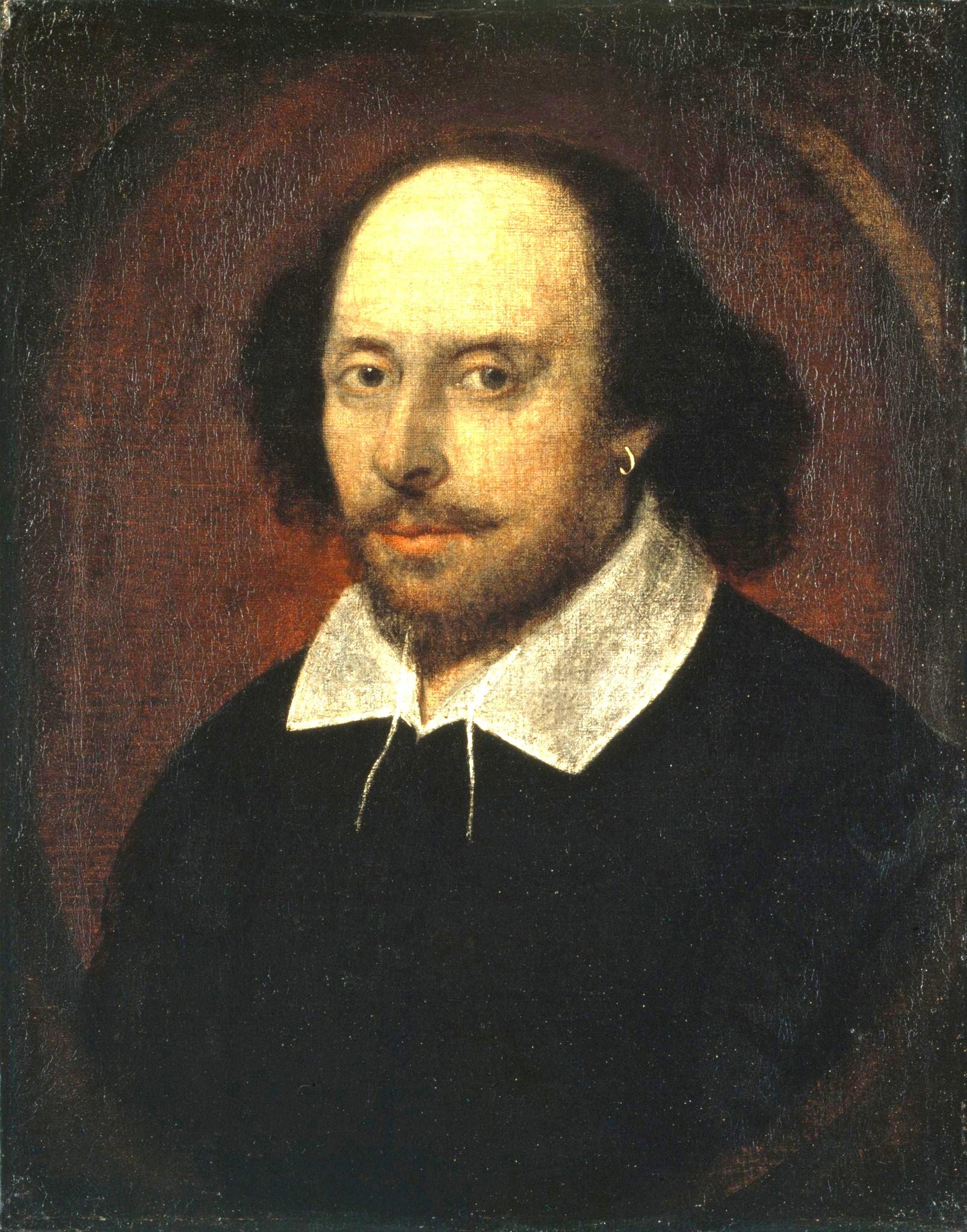
Persino il suo volto racconta una storia ambigua. Il busto funebre nella chiesa della Santissima Trinità di Stratford, l’unico realizzato da chi lo aveva conosciuto, lo raffigurava inizialmente con le mani su un sacco di grano. Un mercante. Un uomo d’affari.
Solo più tardi, quando Shakespeare era ormai diventato “Shakespeare”, quel sacco si trasformò in una penna d’oca e in un foglio di carta. Come se anche l’iconografia avesse dovuto correggere il passato per renderlo all’altezza del mito.
I documenti giudiziari raccontano infatti un William molto lontano dall’immagine del poeta: comprava grano durante le carestie per rivenderlo a caro prezzo, praticava l’usura, evitava le tasse. Nel testamento non c’è traccia di libri o opere, solo beni materiali. Alla moglie lascia “il secondo letto”. Un dettaglio che da secoli divide i romantici dai cinici.
C’è poi il grande buco nero: gli “anni perduti”. Dal 1585 al 1592 Shakespeare scompare, inghiottito da un silenzio che nessun documento riesce a colmare. Nessuno sa dove fosse, cosa facesse, come abbia improvvisamente acquisito una cultura degna di un umanista europeo. Quando riappare, è già dentro il mondo del teatro londinese. Ma anche lì resta stranamente muto: nessun carteggio con altri autori, nessuna traccia di una vita intellettuale condivisa. Un silenzio difficile da conciliare con l’uomo che avrebbe scritto Amleto.
Non stupisce, allora, che nel tempo siano stati proposti decine di “veri Shakespeare”: filosofi, poeti, nobili, persino regine. Tutti, però, con falle evidenti.
Finché, negli ultimi decenni, ha preso corpo un’ipotesi più affascinante delle altre. Non perché definitiva, ma perché culturalmente coerente. Quella di John Florio.
Figlio di Michelangelo Florio, frate francescano toscano convertito al protestantesimo, John Florio nasce a Londra ma cresce tra Italia, Svizzera e Germania. Parla più lingue, conosce il latino e il greco, frequenta Giordano Bruno, traduce Montaigne in inglese, compila i primi grandi dizionari italo-inglesi. Vive a corte, insegna, scrive, osserva.
È difficile trovare, nell’Inghilterra elisabettiana, una figura più adatta a scrivere opere che definiremmo “shakespeariane”, nelle quali per altro compaiono soluzioni stilistiche che rimandano direttamente ai testi di Florio. Non prove definitive, certo. Ma tracce insistenti.
Secondo questa ipotesi, Shakespeare non sarebbe stato l’autore, ma il mediatore perfetto: uomo pratico, inserito nelle compagnie teatrali, capace di vendere e far rappresentare quei testi. Un volto spendibile per un teatro popolare che mal si conciliava con il prestigio di un intellettuale di corte.
All’epoca, scrivere per il teatro non era un vanto. E per un esule religioso come Michelangelo Florio, e per un uomo vicino al potere come John, l’anonimato poteva essere una scelta di sopravvivenza. E poi c’è quell’eredità inquietante: la sterminata biblioteca dei Florio, oggi ancora chiusa agli studiosi. Come se il dubbio dovesse restare tale. Ma alla fine conta davvero sapere chi era Shakespeare? Forse no. O forse sì, ma per motivi diversi da quelli accademici. Mettere in dubbio Shakespeare significa interrogarsi su come nascono i miti culturali, su quanto conti il nome rispetto all’opera.
Chissà, forse aveva ragione Eugenio Montale: “Sono sempre stato convinto che Shakespeare fosse una cooperativa.” E forse proprio questo potrebbe essere il suo segreto più contemporaneo.
Did Shakespeare Ever Exist?
The Doubt, the Myth, and the Italian Shadow of John Florio
For over four centuries, a subtle and persistent doubt has surrounded his figure: what if Shakespeare was nothing more than a name, a front man, a perfectly constructed mask?
We know surprisingly little about William Shakespeare. Very few documents, all of a commercial or legal nature. Six shaky signatures. No letters. No books mentioned in his will. No manuscripts. No funeral tribute upon his death.
Perhaps the most honest biography remains the one written in the eighteenth century by literary critic George Steevens, almost cruel in its simplicity: “He was born, married, went to London, became an actor and a writer, returned to Stratford, made his will and died.” End of story.
And yet, this seemingly ordinary man is credited with works that reveal a striking knowledge of politics, law, philosophy, languages, and European geography. A paradox that, since the nineteenth century, has fueled a question that has never truly faded: who wrote Shakespeare?
Even his face tells an ambiguous story. The funerary bust in the Church of the Holy Trinity in Stratford, the only one made by people who had known him, originally portrayed him with his hands resting on a sack of grain. A merchant. A businessman.
Only later, when Shakespeare had already become “Shakespeare,” did that sack turn into a quill pen and a sheet of paper. As if even iconography had to rewrite the past to make it worthy of the myth.
Legal records describe a William far removed from the image of the poet: he bought grain during famines to resell it at a profit, practiced usury, avoided taxes. His will mentions no books or literary works, only material possessions. To his wife, he left “the second-best bed.” A detail that has divided romantics and cynics for centuries.
Then there is the great black hole: the so-called “lost years.” Between 1585 and 1592, Shakespeare disappears, swallowed by a silence no document can fill. No one knows where he was, what he did, or how he suddenly acquired a culture worthy of a European humanist. When he reappears, he is already part of the London theatre scene. Yet even there he remains strangely silent: no correspondence with other writers, no trace of a shared intellectual life. A silence hard to reconcile with the man who would write Hamlet.
It is therefore unsurprising that, over time, dozens of “real Shakespeares” have been proposed: philosophers, poets, noblemen, even queens. All of them, however, riddled with inconsistencies.
Until, in recent decades, a more fascinating hypothesis has taken shape. Not because it is definitive, but because it is culturally coherent. That of John Florio.
The son of Michelangelo Florio, a Tuscan Franciscan friar who converted to Protestantism, John Florio was born in London but grew up between Italy, Switzerland, and Germany. He spoke several languages, knew Latin and Greek, was close to Giordano Bruno, translated Montaigne into English, and compiled the first comprehensive Italian–English dictionaries. He lived at court, taught, wrote, and observed.
It is hard to find, in Elizabethan England, a figure better suited to writing works we would call “Shakespearean,” in which stylistic solutions appear that directly echo Florio’s own texts. Not definitive proof, of course. But persistent traces.
According to this theory, Shakespeare was not the author but the perfect intermediary: a practical man, embedded in theatre companies, capable of selling and staging those plays. A marketable face for popular theatre, incompatible with the prestige of a court intellectual.
At the time, writing for the stage was hardly a badge of honor. And for a religious exile like Michelangelo Florio, and for a man close to power like John, anonymity could well have been a strategy for survival. Then there is that unsettling legacy: the vast Florio library, still closed to scholars today. As if the doubt itself were meant to endure.
But in the end, does it really matter who Shakespeare was? Perhaps not. Or perhaps it does, but for reasons that go beyond academic debate. Questioning Shakespeare means questioning how cultural myths are born, and how much the name matters compared to the work itself.
Maybe Eugenio Montale was right: “I have always believed that Shakespeare was a cooperative.” And perhaps that, more than anything else, is his most contemporary secret.
Ph credits
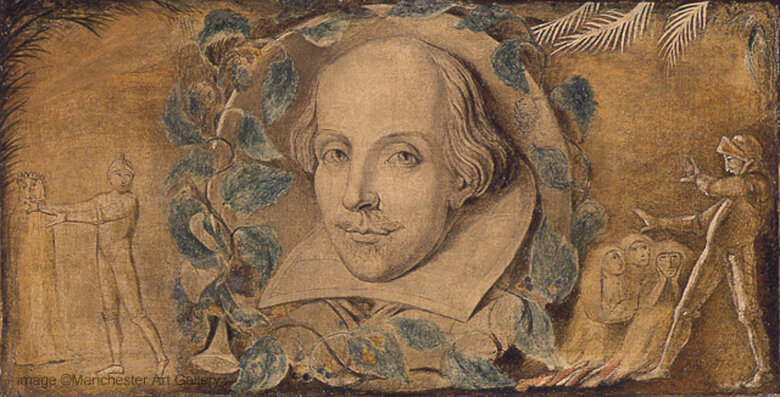
William Blake, Public domain, via Wikimedia Commons
Portrait of William Shakespeare attributed to John Taylor, Public domain, via Wikimedia Commons