Una riflessione recente di Federico Zampaglione fotografa alla perfezione l’attuale deriva dell'industria musicale, ormai ridotta a mera contabilità. I dibattiti si concentrano ossessivamente su quanti biglietti vengano bruciati in poche ore, sui record di spettatori paganti e sui numeri da capogiro sbandierati sui social, mentre il contenuto artistico scivola desolatamente in secondo piano. Si è arrivati al paradosso di un cantante di grande successo commerciale che ha preteso di aver fatto la storia non per il valore delle sue canzoni, ma per aver polverizzato ogni primato di presenze a un evento a pagamento. Davanti a questa sfacciata esibizione di cifre, sorge spontaneo un interrogativo elementare: un vero artista desidera essere ricordato per aver infranto un record numerico o perché la sua musica è entrata nell'immaginario collettivo, diventando il tessuto culturale di una società? Lucio Battisti, ad esempio, nell'arco di tutta la sua vita concesse al pubblico un solo e brevissimo tour, eppure la sua opera è rimasta immortale. Qualcuno potrebbe liquidare il tutto come il riflesso di altri tempi, ma la sensazione persistente è che quelli odierni siano semplicemente tempi vuoti.
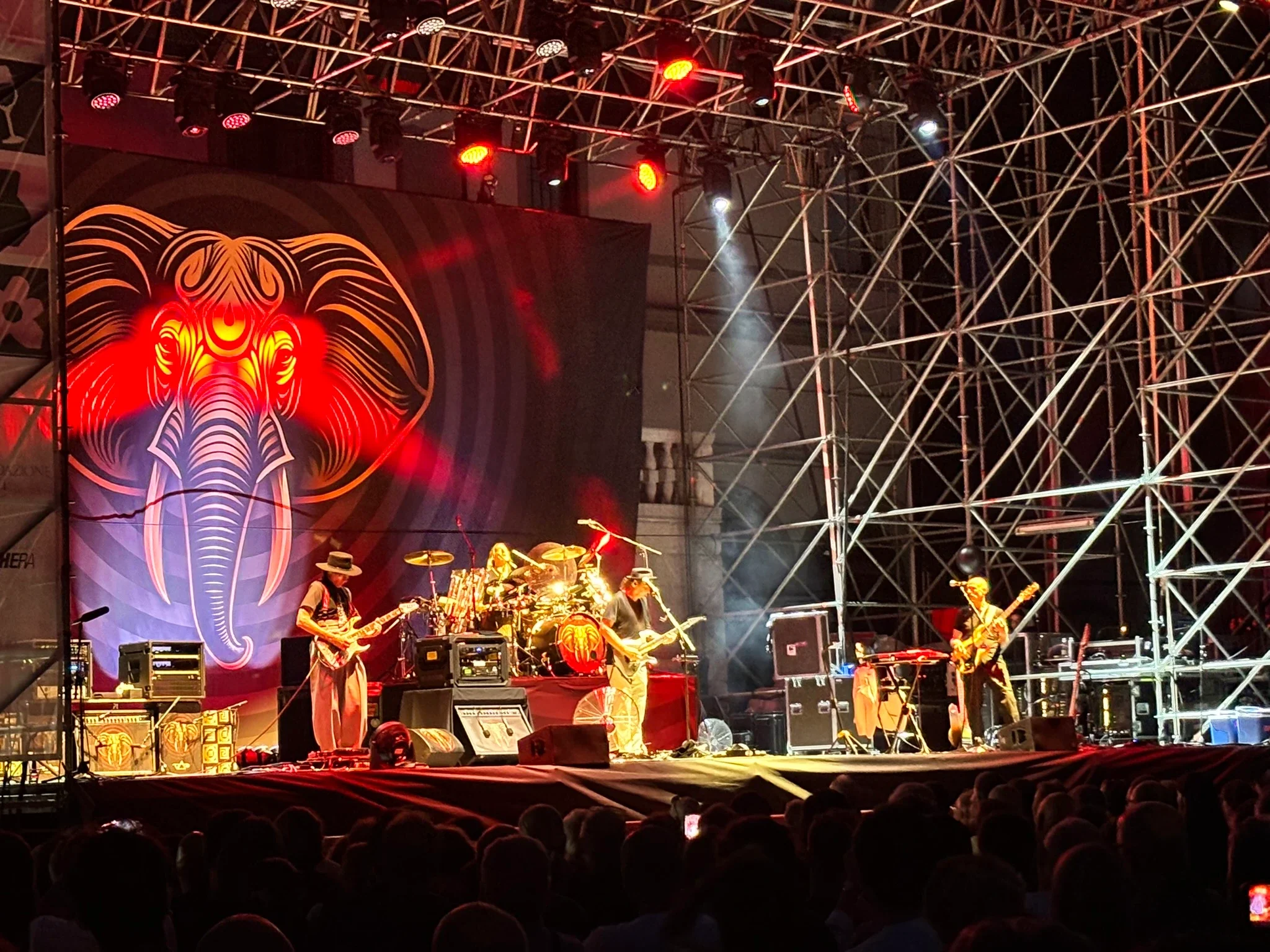
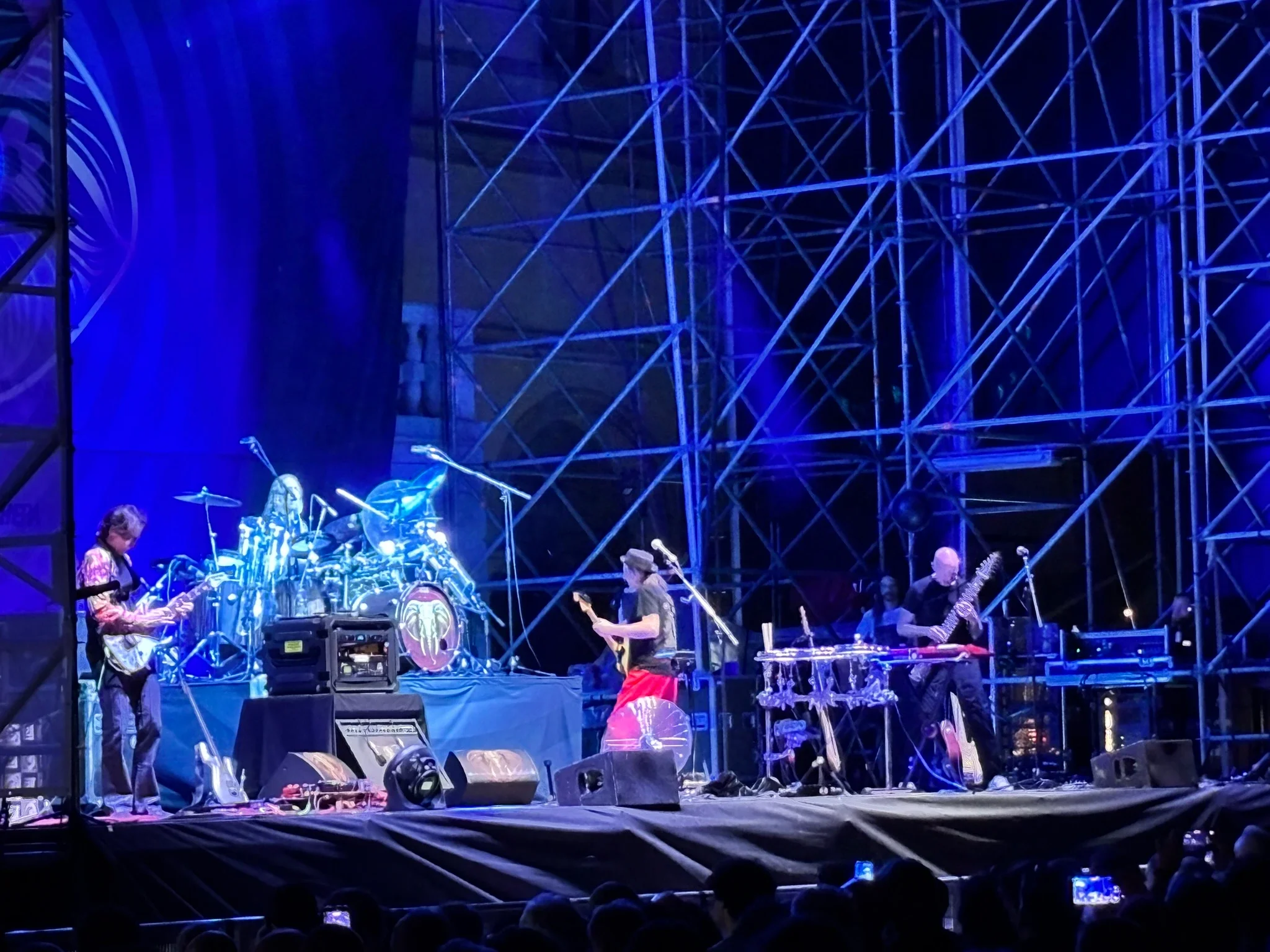
La smentita più fragorosa a questo vuoto culturale è arrivata sul palco del Castello di Udine, dove è salito chi la storia della musica l'ha scritta con i fatti e non con gli algoritmi dei botteghini. Sotto la sigla Beat, tre autentici monumenti come Adrian Belew, Tony Levin e Steve Vai, uniti alla formidabile spinta ritmica di Danny Carey dei Tool, hanno dimostrato cosa significhi infondere vita a un repertorio leggendario. Parliamo di musicisti dal pedigree monumentale: Belew e Levin, oltre alla storica militanza nei King Crimson, vantano collaborazioni con giganti del calibro di David Bowie, Peter Gabriel e John Lennon, mentre Steve Vai è unanimemente riconosciuto come uno dei chitarristi più influenti di sempre, svezzato dal genio totale di Frank Zappa.
Il progetto non nasce come un’operazione nostalgia o una prevedibile esibizione tributo ma ha l’obiettivo di riattivare in maniera radicale un codice espressivo ben preciso: la celebre trilogia dei King Crimson composta dagli album Discipline (1981), Beat (1982) e Three of a Perfect Pair (1984). Quella materia viva, che a distanza di oltre quarant'anni mantiene intatta la sua natura instabile e incandescente, è stata restituita al pubblico senza alcuna pretesa di replica millimetrica o filologica, ma come un dialogo vibrante tra la memoria storica e il rischio dell'improvvisazione.
L'essenza del loro stare sul palco risiede nella capacità di non trattare il passato come un monumento statico da venerare, ma come una materia viva e pulsante da proteggere e tramandare. Per i Beat l'obiettivo fondamentale è proprio questo: mantenere viva la scintilla originaria di quelle composizioni, accettando il rischio di esporle nuovamente all'imprevisto, alle variazioni del momento e alla sensibilità del presente. Steve Vai ha evidenziato come questa musica sia complessa ma accessibile, compatta e ricca di gioia, sottolineando l'incredibile risposta emotiva e la profonda dedizione dimostrata da una comunità di appassionati che si muove ben al di fuori delle logiche del consumo rapido.
L'assenza di Robert Fripp, mente e custode storico del marchio crimsoniano, non ha minimamente indebolito la potenza dell'esecuzione. Lo stesso Fripp ha approvato con entusiasmo l'operazione, suggerendo personalmente il nome Beat per il gruppo e offrendo la sua ideale benedizione a Steve Vai, esortandolo a non imitarlo e a essere semplicemente se stesso sul palco. Il risultato è una band dall'identità fortissima, capace di bilanciare le parti scritte più rigide e matematiche con ampi spazi di libertà, dove persino pietre miliari come Red acquistano una potenza inedita e sfumature diverse ogni sera.
Il concerto, strutturato strategicamente da Adrian Belew dividendo la scaletta in due parti distinte per dare spazio inizialmente ai brani meno frequentati dal vivo, ha confermato che l'eredità di quegli anni non appartiene a una sola epoca. Le canzoni suonano straordinariamente fresche, confermando che la vera arte non ha bisogno di rincorrere le classifiche dei biglietti venduti in pochi minuti per rivendicare il proprio posto nella storia. Rimane il ricordo di una serata di straordinaria intensità, la testimonianza che l'immortalità culturale si conquista con la visione, la disciplina e la capacità di entrare nell'anima di chi ascolta, lasciando i primati contabili a chi non ha altro da offrire.
The lesson of history (and of the present) from Beat in Udine: beyond accounting music
A recent reflection by Federico Zampaglione perfectly captures the current drift of the music industry, now reduced to mere accounting. Debates obsessively focus on how many tickets are burned in a few hours, on records of paying spectators, and on mind-boggling numbers flaunted on social media, while artistic content desolately slides into the background. We have reached the paradox of a commercially highly successful singer who claimed to have made history not because of the value of his songs, but for having shattered every attendance record at a paid event. Faced with this blatant display of figures, a simple question naturally arises: does a true artist want to be remembered for breaking a numerical record, or because their music has entered the collective imagination, becoming the cultural fabric of a society? Lucio Battisti, for instance, granted the public only one very short tour in his entire life, yet his work remains immortal. Some might dismiss all this as a reflection of another era, but the lingering feeling is that today's times are simply empty times.
The most resounding refutation of this cultural void arrived on the stage of Udine Castle, where those who actually wrote music history with facts, rather than box office algorithms, took the stage. Under the moniker Beat, three authentic monuments—Adrian Belew, Tony Levin, and Steve Vai—joined by the formidable rhythmic drive of Tool's Danny Carey, demonstrated what it truly means to breathe life into a legendary repertoire. We are talking about musicians with a monumental pedigree: Belew and Levin, besides their historic tenure with King Crimson, boast collaborations with giants of the caliber of David Bowie, Peter Gabriel, and John Lennon, while Steve Vai is universally recognized as one of the most influential guitarists of all time, nurtured by the total genius of Frank Zappa.
The project was not born as a nostalgia act or a predictable tribute show, but aims to radically reactivate a very precise expressive code: the famous King Crimson trilogy composed of the albums Discipline (1981), Beat (1982), and Three of a Perfect Pair (1984). That living material, which more than forty years later keeps its unstable and incandescent nature completely intact, was returned to the audience without any pretense of millimetric or philological replication, but as a vibrant dialogue between historical memory and the risk of improvisation.
The essence of their presence on stage lies in their ability not to treat the past as a static monument to be venerated, but as a living, breathing matter to be protected and passed on. For Beat, the fundamental goal is precisely this: to keep the original spark of those compositions alive, accepting the risk of exposing them once again to the unexpected, to the variations of the moment, and to the sensitivity of the present. Steve Vai pointed out how this music is complex yet accessible, compact and full of joy, emphasizing the incredible emotional response and profound dedication shown by a community of fans that operates far outside the logic of rapid consumption.
The absence of Robert Fripp, the mind and historical guardian of the Crimson brand, did not weaken the power of the performance in the slightest. Fripp himself enthusiastically approved the operation, personally suggesting the name Beat for the group and offering his ideal blessing to Steve Vai, urging him not to imitate him and to simply be himself on stage. The result is a band with a powerful identity, capable of balancing the most rigid and mathematical written parts with wide spaces of freedom, where even milestones like Red acquire an unprecedented power and different nuances every night.
The concert, strategically structured by Adrian Belew by dividing the setlist into two distinct parts to initially give space to the tracks less frequently performed live, confirmed that the legacy of those years does not belong to a single era. The songs sound extraordinarily fresh, confirming that true art does not need to chase the charts of tickets sold in a few minutes to claim its place in history. What remains is the memory of an evening of extraordinary intensity, a testament that cultural immortality is conquered through vision, discipline, and the ability to enter the listener's soul, leaving accounting records to those who have nothing else to offer.