Prima che la modernità diventasse il nostro paesaggio quotidiano, qualcuno aveva già provato a immaginarla. Aveva intuito la velocità delle città, il fascino ambiguo delle macchine, il desiderio di superare continuamente i confini dell’espressione artistica e persino quelli della vita stessa. È da questa tensione verso il domani che nasce il Futurismo, protagonista della mostra Futurism: Prophecy and Revolution, in programma dal 5 giugno al 6 settembre 2026 al Centro Culturale Andrea Bafile di Caorle.
Promossa dal Comune di Caorle e curata da Matteo Vanzan, l’esposizione riunisce oltre sessanta opere tra dipinti, sculture, fotografie, manifesti, libri e documenti storici, offrendo un percorso che attraversa una delle stagioni più radicali e controverse dell’arte italiana del Novecento.
Il titolo della mostra suggerisce immediatamente la doppia natura del movimento fondato da Filippo Tommaso Marinetti: da un lato la capacità di anticipare trasformazioni culturali e sociali che avrebbero segnato il secolo successivo, dall’altro la volontà di rompere con ogni tradizione consolidata. Una tensione che emerge lungo tutto il percorso espositivo, dove convivono opere iconiche e lavori meno conosciuti provenienti da importanti collezioni pubbliche e private.
Tra i protagonisti figurano alcuni dei nomi più celebri dell’avanguardia italiana, da Giacomo Balla a Umberto Boccioni, da Carlo Carrà a Luigi Russolo, fino a Fortunato Depero, accanto a numerosi artisti che contribuirono a costruire la complessa galassia futurista. Particolare rilievo assume la sezione dedicata all’aeropittura, con opere come Scendendo in città dal cielo di Alfredo Gauro Ambrosi, una delle immagini più efficaci dell’entusiasmo futurista per il volo e per la conquista di nuove prospettive visive.
La mostra dedica inoltre ampio spazio alle pubblicazioni che hanno contribuito alla diffusione delle idee futuriste. Libri e manifesti raccontano infatti un movimento che non si limitò alla pittura o alla scultura, ma investì letteratura, musica, editoria, grafica, moda e persino gastronomia, nel tentativo di ridefinire ogni aspetto dell’esperienza moderna.
«Profezia e rivoluzione intende offrire uno spaccato del Futurismo presentandolo come un movimento coerente e compatto che, dal Manifesto di Marinetti, attraversa la prima metà del Novecento fino al secondo dopoguerra», spiega il curatore Matteo Vanzan. «Il titolo trae ispirazione da una lettera di Umberto Boccioni, esposta in mostra, dal tono sorprendentemente profetico e scritta un anno esatto prima della sua morte. Profezia e rivoluzione sono, del resto, due anime fondative del Futurismo, capaci di intrecciarsi con le visioni e i radicali mutamenti che il movimento introdusse non solo nelle arti, ma anche nella moda, nella musica, nella poesia, nell’editoria e perfino nella cucina».
Il Futurismo fu una rivoluzione culturale che trasformò il rapporto tra arte e vita quotidiana: la celebrazione della velocità, dell’energia e del cambiamento divenne il simbolo di una nuova sensibilità che avrebbe influenzato linguaggi e discipline molto oltre i confini del movimento stesso. Dalla comunicazione pubblicitaria al design, dalla poesia sonora alle successive avanguardie del secondo Novecento, molte intuizioni futuriste continuano ancora oggi a risuonare nel nostro presente.
Futurism: Prophecy and Revolution, attraverso dipinti, documenti e testimonianze storiche, invita a riflettere su quanto quelle visioni abbiano contribuito a costruire l’immaginario contemporaneo e su come il rapporto tra innovazione, tecnologia e creatività continui a rappresentare una delle questioni centrali del nostro tempo.
“Per essere futurista non ci vuole patente. Per essere futurista non occorre schedario.
Per essere futurista basta amare ed odiare: odiare il conformismo, odiare l’ipocrisia,
amar l’intelligenza, amar la libertà”
Informazioni utili
Futurism: Prophecy and Revolution
Centro Culturale Andrea Bafile, Caorle (Venezia)
Dal 5 giugno al 6 settembre 2026
Orari Tutti i giorni dalle 9.30 alle 12.30 e dalle 18.30 alle 22.00. Ultimo ingresso 30 minuti prima della chiusura.
Futurism: prophecy and revolution, in Caorle the Movement that imangined the future
Before modernity became the landscape of our everyday lives, someone had already tried to imagine it. They sensed the speed of cities, the ambiguous fascination of machines, the desire to constantly push beyond the boundaries of artistic expression and even those of life itself. It is from this tension towards tomorrow that Futurism was born, the protagonist of the exhibition Futurism: Prophecy and Revolution, on view from June 5 to September 6, 2026, at the Andrea Bafile Cultural Centre in Caorle.
Promoted by the Municipality of Caorle and curated by Matteo Vanzan, the exhibition brings together more than sixty works, including paintings, sculptures, photographs, posters, books and historical documents, offering a journey through one of the most radical and controversial chapters of twentieth-century Italian art.
The exhibition’s title immediately suggests the dual nature of the movement founded by Filippo Tommaso Marinetti: on one hand, its ability to anticipate cultural and social transformations that would shape the century to come; on the other, its determination to break with every established tradition. This tension emerges throughout the exhibition, where iconic masterpieces coexist with lesser-known works from important public and private collections.
Among the featured artists are some of the most celebrated figures of the Italian avant-garde, from Giacomo Balla and Umberto Boccioni to Carlo Carrà, Luigi Russolo and Fortunato Depero, alongside many other contributors who helped build the complex universe of Futurism. Special attention is devoted to Aeropainting, with works such as Descending into the City from the Sky by Alfredo Gauro Ambrosi, one of the most effective visual expressions of the Futurists’ enthusiasm for flight and the conquest of new perspectives.
The exhibition also dedicates considerable space to the publications that helped spread Futurist ideas. Books and manifestos reveal a movement that extended far beyond painting and sculpture, embracing literature, music, publishing, graphic design, fashion and even gastronomy in an effort to redefine every aspect of modern experience.
“Prophecy and Revolution aims to offer a portrait of Futurism as a coherent and unified movement which, from Marinetti’s Manifesto, spans the first half of the twentieth century and reaches into the post-war period,” explains curator Matteo Vanzan. “The title draws inspiration from a letter by Umberto Boccioni, displayed in the exhibition, whose surprisingly prophetic tone was written exactly one year before his death. Prophecy and revolution are, after all, two founding souls of Futurism, intertwined with the visions and radical transformations that the movement introduced not only in the arts, but also in fashion, music, poetry, publishing and even cuisine.”
Futurism was a cultural revolution that transformed the relationship between art and everyday life. Its celebration of speed, energy and change became the symbol of a new sensibility that would influence languages and disciplines far beyond the boundaries of the movement itself. From advertising and design to sound poetry and the avant-garde movements of the later twentieth century, many Futurist intuitions continue to resonate today.
Through paintings, documents and historical testimonies, Futurism: Prophecy and Revolution invites visitors to reflect on how those visions helped shape the contemporary imagination and on how the relationship between innovation, technology and creativity remains one of the defining questions of our time.
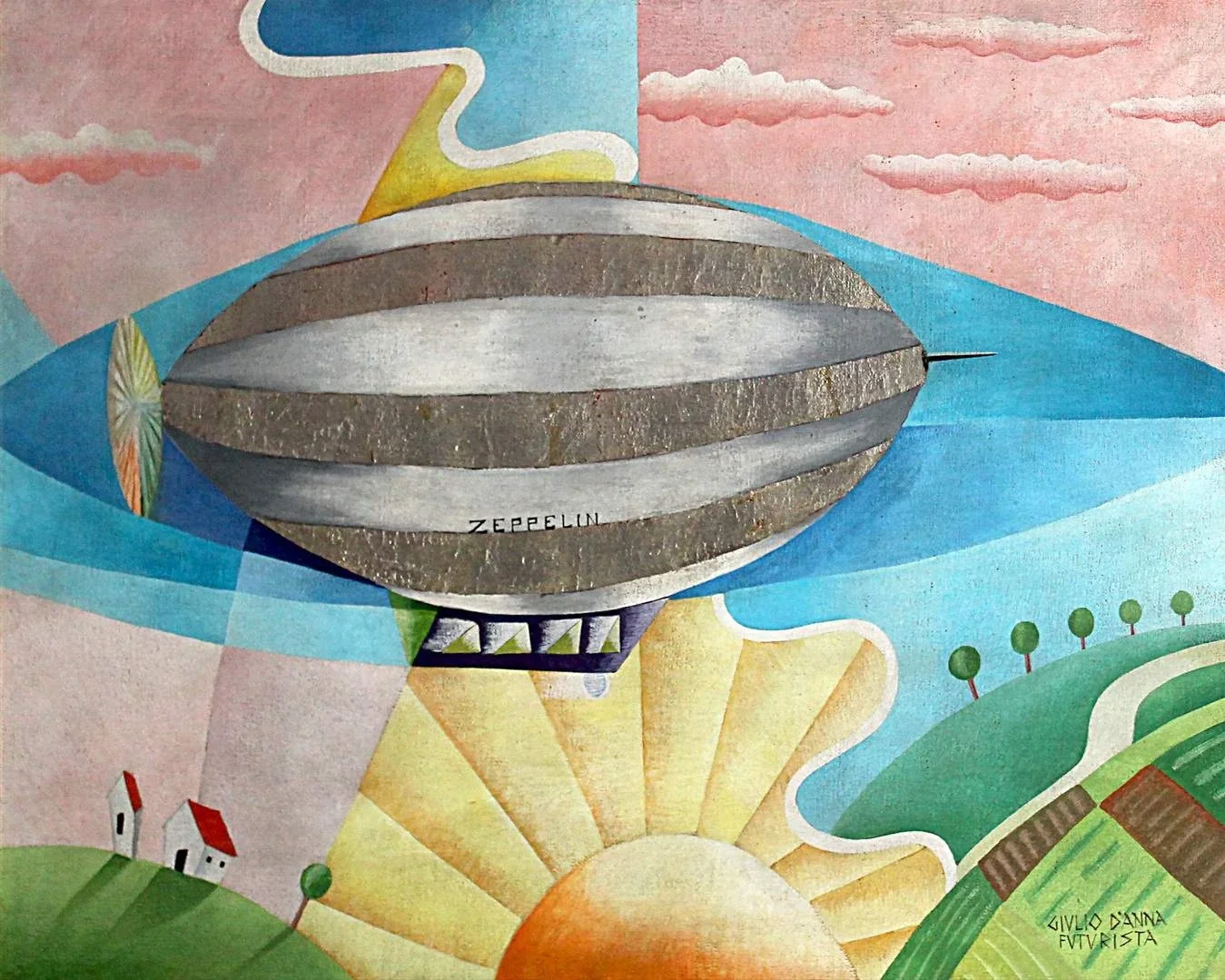
In the cover: Giulio D'anna - Zeppelin
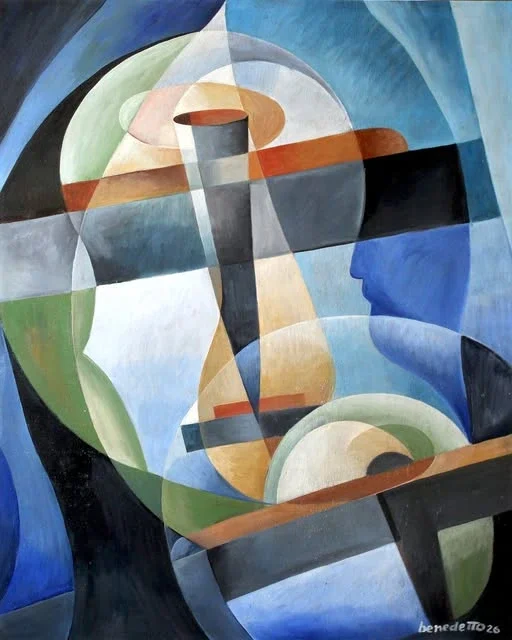
Enzo Benedetto - Record