Vederla dal vivo aiuta a capire perché Madame sia oggi una delle voci più originali e libere della musica italiana. Ma soprattutto permette di cogliere qualcosa che dischi e classifiche restituiscono solo in parte: la sua capacità di stare sul palco senza nascondere le proprie contraddizioni, trasformando fragilità, rabbia, desiderio e inquietudine in materia musicale.
Il concerto del 29 luglio a Udine, nel corso del tour dedicato a Disincanto, il suo ultimo album uscito lo scorso aprile, costruisce proprio su questo terreno la propria forza. Madame mette in scena un percorso nel quale musica, immagini, luci e performance provano a raccontare una storia fatta di rotture, fratture, ricordi e possibilità di rinascita.
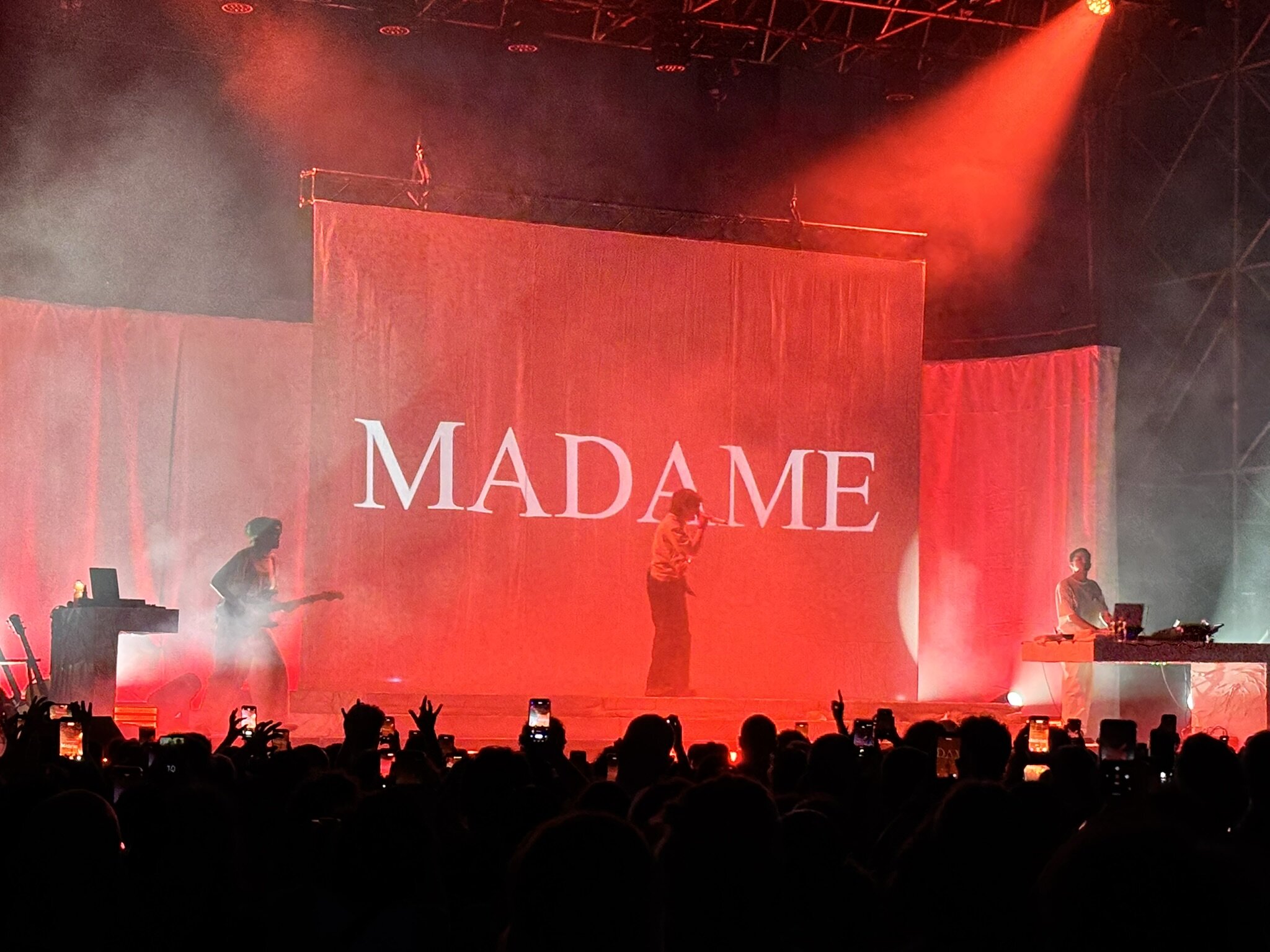
La scenografia è essenziale, quasi spoglia. Al centro del palco alcuni grandi tendoni bianchi diventano, nel corso dello spettacolo, superfici sulle quali proiettare immagini, video e parole. Ai lati ci sono i musicisti: Bias alla console, anche responsabile della direzione artistica dello show, e il versatile Luca Narducci, che suona chitarre, basso e tastiere.
L'apertura con Intro Bambini Notte sta tra Dario Argento e lo Zecchino d’Oro: decisamente enigmatica. Poi arrivano Ok, Volevo Capire, Disincanto, Come Stai e Puttana svizzera, e il concerto parte di botto. Madame sceglie immediatamente l'energia, quella dimensione urban-pop nella quale convivono rap, trap, R&B e raffinato cantautorato italiano.
È uno dei suoi punti di forza: prendere linguaggi diversi e farli convivere senza preoccuparsi troppo di rispettarne i confini. La sua musica può essere ruvida, melodica, elettronica e, anche dal vivo, questa libertà rimane intatta.
Dopo la prima parte più fisica dello spettacolo, il ritmo cambia. Pensavo a… - Skit accompagna Madame verso una dimensione più intima e riflessiva, fatta di storie di donne intense e drammatiche, di vita vissuta e sentimenti messi a nudo. Con Donna vedi e Quanto forte ti pensavo, che porta con sé echi di Rino Gaetano, il racconto si fa ancora più personale e il concerto comincia ad assumere una dimensione quasi teatrale.
Il passaggio decisivo arriva con un intermezzo. Le luci si abbassano e sullo schermo scorrono immagini di una famiglia, mentre un monologo conduce a una frase destinata a restare sospesa nell’aria: «la famiglia non è sacra». La tensione cresce fino alla voce di una madre che confessa di non sapere più come aiutare la propria figlia. Madame allora si siede a terra e interpreta Mami Papi, circondata dalle immagini dell'infanzia e della famiglia.
È un momento nel quale il palco cambia ancora una volta funzione diventando il luogo in cui Madame prova a mettere ordine dentro ricordi, ferite e una materia emotiva profondamente personale.
In Aranciata le immagini del mare e dell'infanzia, immerse nel blu, accompagnano un ricordo che sembra lontano ma non risolto. Poi arrivano Allucinazioni e Rosso come il fango, e il viaggio si fa ancora più scuro e introspettivo.
Con la comparsa del pianoforte bianco sul palco arriva il momento cantautoriale per eccellenza. Madame si siede alla tastiera per Sciccherie, uno dei brani che appartengono agli inizi del suo percorso, quasi a ricordare da dove tutto è partito. Poi è Bias a prendere posto al pianoforte per accompagnare il gioiello assoluto di Disincanto, No Pressure. È il momento in cui emerge con particolare evidenza una qualità che appartiene alla performer prima ancora che alla cantante: Madame è già padrona del palco, sa stare ferma, sa quando lasciare parlare una canzone e sa sostenere l'attenzione anche nei momenti più rarefatti. E la voce, dal vivo, è una sorpresa ulteriore: potente, personale, riconoscibile, capace di passare dalla delicatezza all'urto senza perdere intensità.
Proprio quando il concerto sembra aver raggiunto uno dei suoi punti di maggiore tensione emotiva arriva però il momento più debole dello spettacolo.
Il gioco della confessione: Madame invita alcune persone del pubblico a raccontare un segreto, qualcosa di intimo e personale. L'idea, nelle intenzioni, dovrebbe rafforzare il rapporto tra artista e spettatori e creare un momento di condivisione autentica. Nella pratica produce l'effetto opposto.
Un conto è un'artista che mette a nudo se stessa attraverso le proprie canzoni, trasformando esperienze private in qualcosa che appartiene anche agli altri, la famosa catarsi. Un altro è chiedere a chi sta sotto il palco di mettere i propri fatti in piazza. Il rischio è quello di scivolare dalla dimensione del concerto a quella della sagra paesana.
È un vero peccato perché il siparietto non è brevissimo e arriva in un punto delicato della costruzione dello show. Dopo aver accumulato tensione emotiva attraverso musica, immagini e teatro, il concerto subisce una sorta di coitus interruptus: il clima si spezza e il climax costruito fino a quel momento si disperde. Non è semplice riprenderlo.
Madame, però, dimostra di avere abbastanza personalità scenica per riuscirci. E lo fa poco dopo, con Grazie, trasformando il palco in una seduta terapeutica nella quale Bias interpreta il terapeuta. La trovata è teatrale, ma questa volta è anche coerente con il racconto costruito fino a quel momento: la terapia diventa un altro modo per entrare nelle proprie fragilità senza delegare al pubblico il compito di raccontarle.
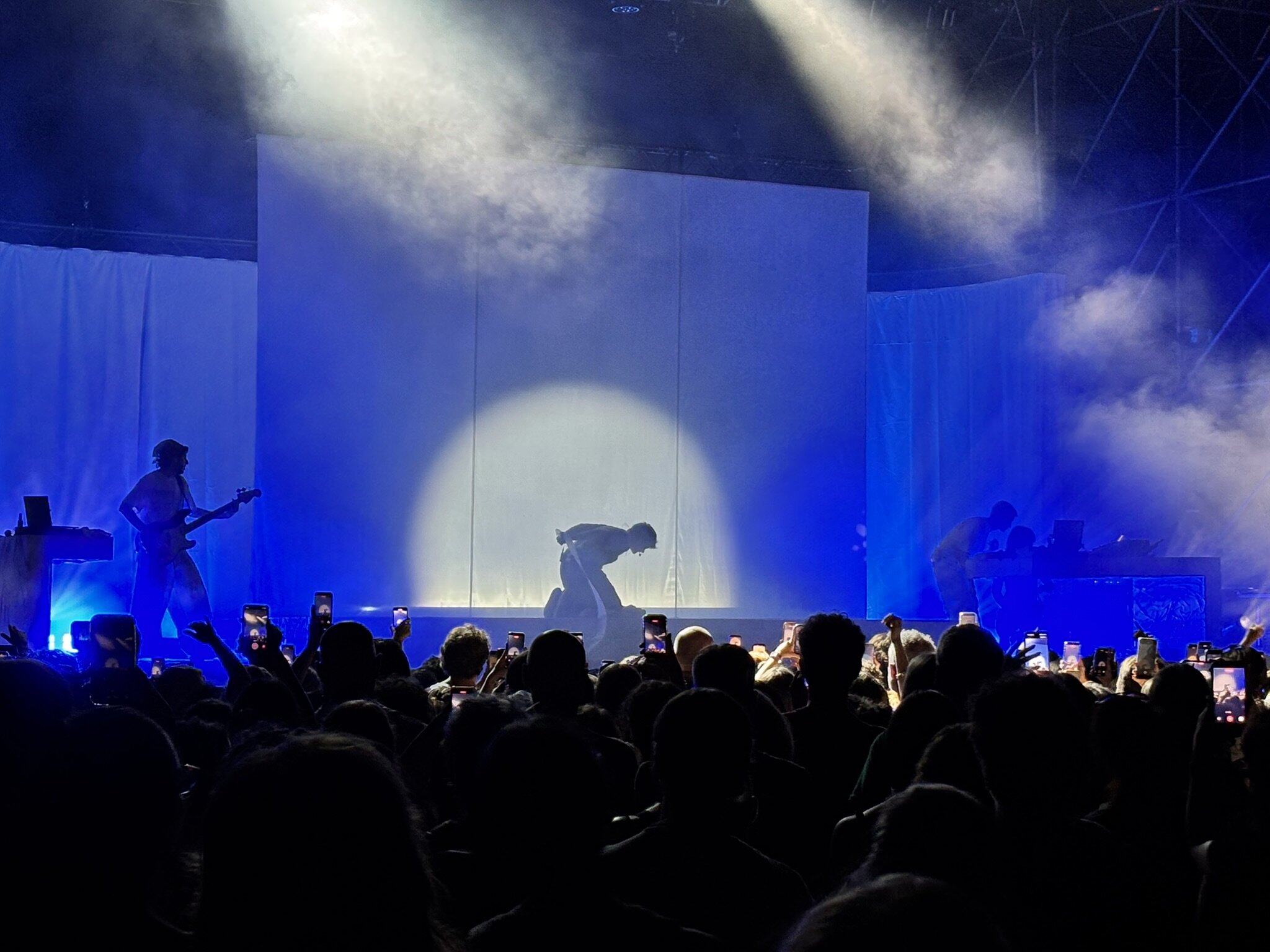
La parte finale riprende così quota. Un personaggio mascherato entra in scena e lega le braccia di Madame con un nastro bianco. È il momento di Bestia, cantata dall'artista in ginocchio, una delle immagini più forti dell'intero concerto. Le atmosfere più cupe lasciano progressivamente spazio all'energia, che esplode con Il bene nel male e la sua fantastica coda techno. I beat prendono il sopravvento e il palco cambia ancora una volta pelle. Dopo avere attraversato dolore, memoria, famiglia e fragilità, Madame porta il pubblico verso una dimensione decisamente più liberatoria.
Il bis con M’ama non m’ama sembra chiudere il cerchio. Poi arriva di nuovo OK, che riprende il brano dell'inizio e conclude lo spettacolo esattamente là dove era cominciato.
È una struttura ambiziosa, forse in alcuni momenti fin troppo costruita, ma coerente con un'artista che sembra non voler scegliere tra il concerto e la performance. Madame vuole fare entrambe le cose e, nella maggior parte dei casi, ci riesce.
Il passaggio più debole resta dunque quello del confessionale, proprio perché interrompe un racconto che fino a quel momento aveva trovato una sua misura. E fa anche riflettere sulla disponibilità con cui molte persone oggi affidano la propria intimità a un pubblico, trasformandola in spettacolo. È un fenomeno che va oltre Madame e che appartiene a un tempo nel quale raccontare tutto sembra spesso diventato più importante che custodire ciò che di più intimo dovrebbe restare sacro e inviolabile.
Per Madame, però, il tempo è dalla sua parte. È giovane e ha davanti molta musica da immaginare, molti palchi e probabilmente molte cose da imparare sulla costruzione di uno spettacolo. Ma a Udine ha già mostrato qualità che non si improvvisano: presenza scenica, una voce sorprendente e una precisa idea di quello che vuole essere.
Soprattutto, ha confermato di essere un'artista capace di parlare al presente senza cercare continuamente di renderlo rassicurante. La sua musica mette insieme linguaggi diversi, ma la vera forza sta nella capacità di trasformare le inquietudini personali in qualcosa di condivisibile.
È forse per questo che Madame appare già oggi come una delle voci più autorevoli e indispensabili della musica italiana del XXI secolo.
Madame live: a concert that digs into wounds and turns them into energy
Seeing Madame live helps explain why she is now considered one of the most original and free-spirited voices in Italian music. But above all, it reveals something that records and charts can only convey in part: her ability to command the stage without hiding her contradictions, turning fragility, anger, desire and unease into musical matter.
The concert on July 29 in Udine, part of the tour supporting Disincanto, her latest album released last April, builds its strength precisely on this ground. Madame creates a journey in which music, images, lights and performance come together to tell a story of ruptures, fractures, memories and the possibility of rebirth.
The stage design is spare, almost bare. At the centre of the stage, large white curtains gradually become surfaces onto which images, videos and words are projected. The musicians are positioned on either side: Bias at the console, also responsible for the show's artistic direction, and the versatile Luca Narducci, who plays guitar, bass and keyboards.
The opening with Intro Bambini Notte sits somewhere between Dario Argento and The Zecchino d’Oro: decidedly enigmatic. Then come OK, Volevo Capire, Disincanto, Come Stai and Puttana Svizzera, and the concert gets off to a flying start. Madame immediately chooses energy, that urban-pop dimension where rap, trap, R&B and sophisticated Italian singer-songwriter music coexist.
It is one of her greatest strengths: bringing different languages together without worrying too much about their boundaries. Her music can be raw, melodic, electronic and, even live, that freedom remains intact.
After the more physical opening section, the pace changes. Pensavo a… - Skit leads Madame towards a more intimate and reflective dimension, made of intense and dramatic stories about women, lived experience and feelings laid bare. With Donna Vedi and Quanto Forte Ti Pensavo, the latter carrying echoes of Rino Gaetano, the narrative becomes even more personal and the concert begins to take on an almost theatrical dimension.
The decisive transition comes with an interlude. The lights dim and images of a family appear on the screen, while a monologue leads to a phrase destined to linger in the air: “family is not sacred.” The tension builds until the voice of a mother confesses that she no longer knows how to help her daughter. Madame then sits on the floor and performs Mami Papi, surrounded by images of childhood and family.
It is a moment in which the stage changes function once again, becoming a place where Madame tries to put memories, wounds and deeply personal emotions into some kind of order.
In Aranciata, images of the sea and childhood, immersed in blue, accompany a memory that feels distant but unresolved. Then come Allucinazioni and Rosso Come Il Fango, and the journey becomes even darker and more introspective.
With the appearance of a white piano on stage comes the quintessential singer-songwriter moment. Madame sits at the keyboard for Sciccherie, one of the songs from the early stages of her career, almost as if recalling where it all began. Then Bias takes his place at the piano to accompany the absolute gem of Disincanto, No Pressure. This is when one of Madame's qualities becomes especially evident, belonging to the performer even before the singer: she already owns the stage. She knows how to stand still, when to let a song speak for itself and how to hold the audience's attention even in the most stripped-back moments. And her voice, live, is another surprise: powerful, personal, unmistakable, capable of moving from delicacy to impact without losing intensity.
Just when the concert seems to have reached one of its highest points of emotional tension, its weakest moment arrives.
The confession game: Madame invites members of the audience to reveal a secret, something intimate and personal. In theory, the idea should strengthen the relationship between artist and audience and create a moment of genuine sharing. In practice, it produces the opposite effect.
There is a difference between an artist exposing herself through her songs, turning private experiences into something that belongs to others as well, the famous catharsis. And then there is asking people beneath the stage to put their private business on display. The risk is that the concert slips from its own dimension into that of a village fair.
It is a real shame because the interlude is not particularly brief and comes at a delicate point in the structure of the show. After building emotional tension through music, images and theatre, the concert experiences a sort of coitus interruptus: the atmosphere breaks and the climax built up to that point disperses. It is not easy to recover it.
Madame, however, proves to have enough stage presence to do just that. She manages it shortly afterwards with Grazie, turning the stage into a therapy session in which Bias plays the therapist. The idea is theatrical, but this time it is also consistent with the narrative developed up to that point: therapy becomes another way of entering into vulnerability without asking the audience to tell its own stories.
The final part gains momentum again. A masked figure enters the stage and ties Madame's arms with a white ribbon. It is time for Bestia, performed by the artist on her knees, one of the strongest images of the entire concert. The darker atmospheres gradually give way to energy, which explodes with Il Bene Nel Male and its fantastic techno outro. The beats take over and the stage changes skin once again. Having crossed pain, memory, family and vulnerability, Madame leads the audience towards a distinctly more liberating dimension.
The encore with M’ama Non M’ama seems to close the circle. Then OK returns, reprising the opening song and bringing the show to an end exactly where it began.
It is an ambitious structure, perhaps at times overly constructed, but coherent with an artist who seems unwilling to choose between concert and performance. Madame wants to do both and, for the most part, she succeeds.
The weakest point remains the confession section, precisely because it interrupts a narrative that had found its own balance up to that moment. It also prompts reflection on the willingness with which so many people today hand their private lives over to an audience, turning them into entertainment. It is a phenomenon that goes beyond Madame and belongs to a time in which telling everything often seems to have become more important than protecting what should remain sacred and inviolable.
But Madame has time on her side. She is young and still has a lot of music to imagine, many stages ahead of her and probably many things to learn about the construction of a live show. Yet in Udine she has already shown qualities that cannot be improvised: stage presence, a remarkable voice and a clear idea of what she wants to be.
Above all, she has confirmed that she is an artist capable of speaking to the present without constantly trying to make it reassuring. Her music brings different languages together, but its real strength lies in turning personal unease into something that can be shared.
Perhaps that is why Madame already appears to be one of the most authoritative and indispensable voices in 21st-century Italian music.